
Someone Impersonating Me Online Asking for Money
Someone impersonating me online asking for money? Learn how to preserve evidence, warn contacts, report the account and prepare a police report in Italy.
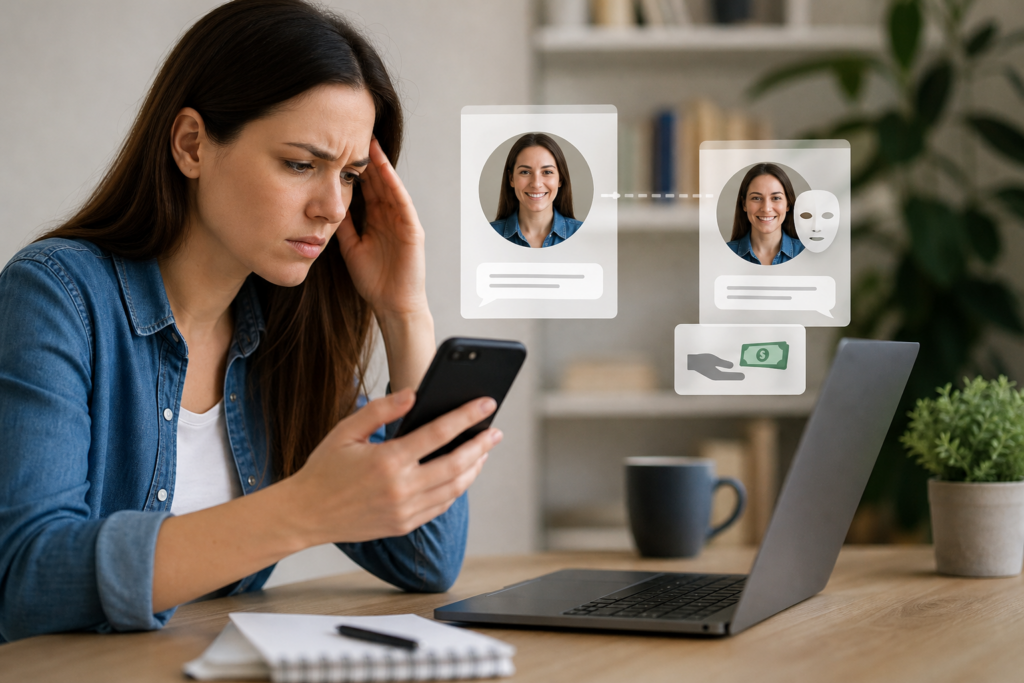
Someone impersonating me online asking for money is an urgent problem, even if nobody has paid yet. A copied photograph, familiar name and convincing emergency story can make friends or customers trust a fraudulent request. Under Italian law, this may involve identity substitution and fraud—not simply a fake profile.
Your priorities are to interrupt payments, preserve evidence and report the conduct. You do not need to identify the person behind the account before contacting the police. Keep two issues separate: someone is misusing your identity, and the people receiving requests may be fraud victims.
Someone impersonating me online asking for money: first steps
Start with the people most likely to transfer money. Contact them by phone or another channel you know is safe, especially if your genuine messaging account may have been compromised.
- Stop imminent payments: tell recipients not to pay, click links or share verification codes.
- Save identifying evidence: capture the profile, its link and at least one complete payment request.
- Warn affected contacts: use a short, factual message through a trusted channel.
- Report the account and messages: select impersonation and scam reporting options where available.
- If money has moved: ask the sender to contact their bank or payment provider immediately.
Do not pay the impersonator to remove the account or send identity documents to “prove” who you are. If messages include credible threats or someone faces immediate danger, contact emergency services on 112.
Preserve profile links, messages and payment details
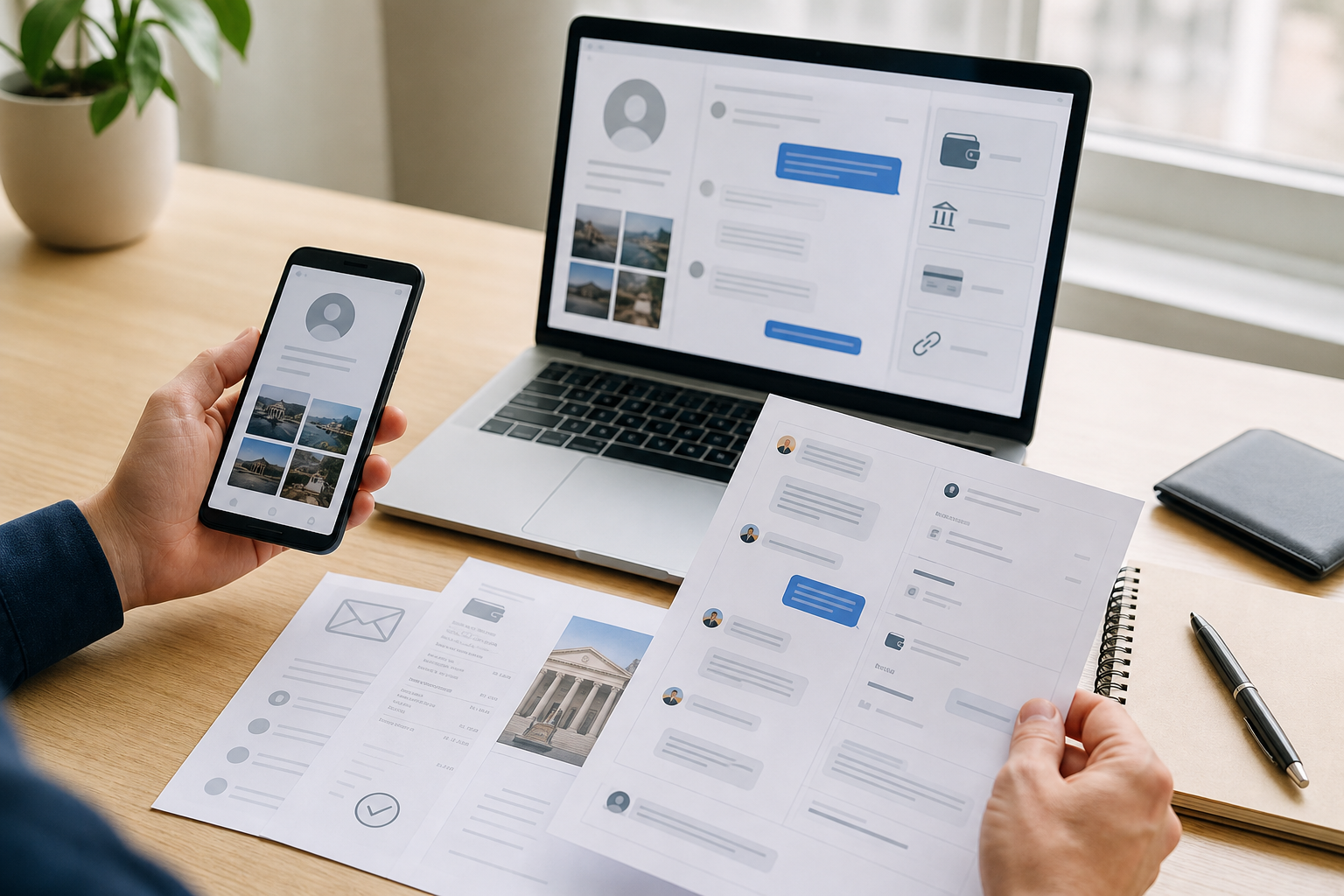
A screenshot showing only your photograph is rarely enough to explain what happened. Investigators need to connect the account, the deception and the payment request.
- Account details: profile URL, username, display name, visible account identifier and biography.
- Complete conversations: the introduction, claimed identity, money request, payment instructions and follow-up messages.
- Timing: visible message timestamps, when the recipient received the request and when you discovered it.
- Payment destinations: IBAN, payment handle, wallet address, payment link or beneficiary details exactly as displayed.
- Supporting records: emails, transaction receipts, platform report confirmations and relevant notifications.
Ask recipients to retain original chats on their devices and export them where possible. Save uncropped screenshots; make separate redacted copies for warnings or wider sharing. A screen recording can show how the profile connects to the conversation, but it should supplement—not replace—the underlying records.
Do not click suspicious payment links merely to investigate them. Preserve the displayed address instead. Screenshots can be useful evidence in Italy, but their authenticity, completeness and context may be challenged. A lawyer can assess whether additional technical preservation is worthwhile.
Warn contacts without spreading the scam
Warn people likely to receive the request first. A public notice may help when the impersonator is contacting a broad audience, but avoid reposting the scam’s payment link, QR code or unredacted conversations.
Someone is using my name and photo to request money. Those requests are not from me. Please do not pay or share codes. If you received a message, contact me through my usual number and keep the conversation for evidence.
If you include the fake username to help people recognise it, avoid making it a clickable link. Do not publicly accuse a suspected individual without reliable evidence: an account name or payment beneficiary does not establish who controls the operation.
Illustrative scenario: a copied account asks several relatives for an urgent loan. Privately calling those relatives and posting one factual warning is more useful than repeatedly sharing screenshots that circulate the fraudster’s payment details.
If someone has already paid
The sender should immediately contact their bank or payment service through its official app, website or established telephone number. They should explain that an impersonator induced the payment and ask what fraud-response, recall or dispute procedures are available.
Be precise about the transaction. A transfer the victim approved after being deceived is not the same as a payment made without their authorisation. Available remedies depend on the payment method and circumstances; recovery is not guaranteed.
The sender should preserve the receipt, transaction reference, destination details and conversation. They should also report their own loss to the police. Your report about identity misuse does not necessarily replace the payment victim’s complaint. Avoid anyone promising recovery in exchange for an upfront fee or account credentials.
Report impersonation and check your own accounts
Use the platform’s official reporting process. Where possible, report both the impersonating profile and the individual messages requesting payment: these provide different evidence of the abuse.
- On social networks, look for the profile menu and the option for reporting impersonation.
- In messaging apps, report the relevant account or conversation using the available abuse controls.
- If the platform requests identity verification, use only its official process and provide only what it requires.
- Save the report reference, confirmation and any review decision.
Menu labels and verification requirements change. Use the platform’s official help centre rather than links sent by supposed support agents. Reporting does not guarantee removal, and it does not replace a police report.
Also establish whether this is a copied account or a takeover of your real account. For a suspected takeover, secure the associated email, change reused passwords, review active sessions and enable two-factor authentication. Preserve evidence when feasible, but do not delay stopping an active compromise.
Which Italian laws may apply?
Identity substitution: Article 494 c.p.
Article 494 of the Italian Criminal Code covers misleading another person through identity substitution or specified false identity claims, with the purpose of obtaining an advantage or causing harm.
Using your identity to solicit money may fall within this offence. Not every copied photograph automatically meets its requirements, and a completed payment is not necessary for identity substitution to be relevant.
Fraud: Article 640 c.p.
Article 640 c.p. concerns obtaining an unjust profit through deceptive conduct that induces error and causes another person financial loss.
If nobody pays, attempted fraud may still require assessment. Identity substitution and fraud can be relevant to the same events. This is not automatically defamation: reputational offences require their own legal elements.
Prepare a police report in Italy
You can approach the Polizia Postale, another Polizia di Stato office or the Carabinieri. Bring identification, your evidence and a short chronology covering:
- Which identity details were copied or which account was compromised.
- When you discovered the conduct and who received requests.
- What was requested, where payment was directed and whether anyone paid.
- Which accounts you reported and any continuing threats or contact.
You can report an unknown perpetrator. Distinguish facts you personally observed from information supplied by contacts, and identify witnesses who retain the original messages.
A denuncia and a querela are not interchangeable. A denuncia reports facts; a querela also expresses the injured person’s wish for prosecution where the law requires it. Article 494 is generally prosecuted ex officio. Fraud may require a querela, although exceptions apply. Where required, the ordinary deadline is generally three months from knowledge of the offence; the applicable rule and starting point need individual assessment.
Do not assume an online tip, platform report or informal email satisfies filing requirements. Ask the receiving authority to clarify the formalities and provide filing confirmation.
Submit your case for legal assessment
Prepare a concise summary with profile links, complete messages, discovery dates and any payment records. Avoid uploading passwords, verification codes or unrelated private conversations. A lawyer can assess the offences, filing requirements and appropriate next steps. This guide does not replace personalised legal advice.
Submit your case and get a lawyer’s reply. Explain whether anyone has paid and whether the impersonator is still contacting people, so the urgent issues are clear.
Frequently asked questions
Can I report impersonation if nobody has sent money?
Yes. Identity substitution under Article 494 c.p. may be relevant even without a completed payment. Attempted fraud may also require assessment. Preserve the account details and requests rather than waiting for someone to lose money.
Am I responsible for money friends send to someone impersonating me?
Being impersonated does not by itself make you responsible for the scammer’s debts or victims’ losses. Any liability depends on your own conduct and the circumstances. Preserve evidence and seek advice if someone demands reimbursement from you.
Can I file a police report without knowing the scammer’s real name?
Yes. You can report an unknown perpetrator. Supply profile links, usernames, messages and payment details without presenting assumptions about the person’s identity as facts.
Should I block the fake account immediately?
Preserve the accessible profile details and messages first if it is safe to do so, then report and block as appropriate. Do not continue engaging merely to collect more evidence, and prioritise safety if threats are involved.
Does reporting the fake account stop the Italian complaint deadline?
No. A platform report does not suspend or satisfy a querela deadline. Where a querela is required, get prompt advice on the applicable deadline and formal filing requirements.
Did this happen to you?
Open a case: a lawyer calls you within 48 hours.