
How to File a Defamation Complaint Against an Anonymous User
Searching how to file defamation complaint anonymous user? Learn the Italian querela steps, evidence to save and why you should not wait for identification.
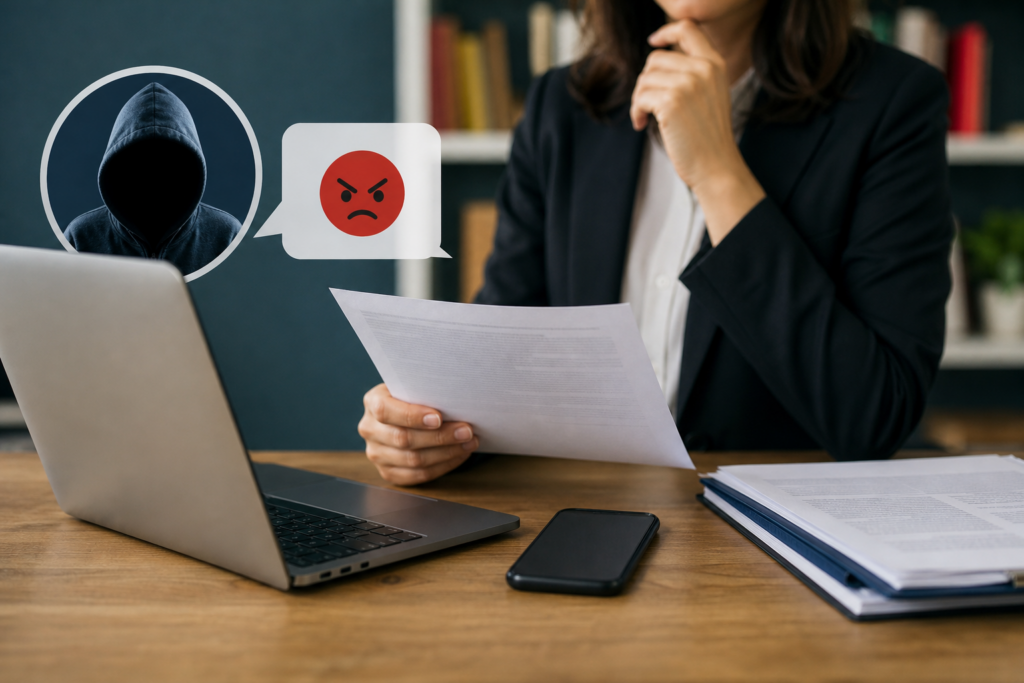
If you are searching for how to file defamation complaint anonymous user, the key point under Italian law is this: you can file a querela without knowing who operates the account. A complaint against an unidentified person, commonly called a querela contro ignoti, lets you report the facts and request prosecution without guessing the author’s identity.
Your immediate priorities are to preserve the content, record when you discovered it and act within the applicable deadline. Reporting the account to the platform is useful, but it does not replace a criminal complaint.
1. Check whether the content may constitute defamation
Article 595 of the Italian Criminal Code covers injury to someone’s reputation through communication with multiple people while the person targeted is absent from that communication. Public online posts can fall within the aggravated form involving a means of publicity.
A fake name does not make a statement unlawful by itself. What matters is the content, its audience, its context and whether readers can identify you. An explicit name is not essential if details make the target recognisable.
For example, an anonymous account posts in a neighbourhood group that a clearly identifiable local professional steals clients’ deposits. That is different from expressing dissatisfaction with an appointment. Critical opinions can be lawful; allegations of misconduct require careful assessment of their factual basis and context.
A message sent only to you generally does not meet the multiple-recipient element of defamation, although threats or repeated harassment may raise other legal issues.
2. Preserve the post and the account before reporting them
Content can disappear after a platform report. Save what is available first, unless doing so would delay an urgent safety response.
- Capture the full statement: include surrounding comments, dates and visible audience information.
- Save direct links: record the post URL and profile URL separately.
- Record account identifiers: username, display name and any visible numeric account ID.
- Keep original files: preserve screenshots and recordings without cropping, annotations or other edits.
- Record your discovery date: explain when and how you first learned about the publication.
- Identify potential witnesses: note who saw the post and whether they retain their own copies.
Screenshots can be useful evidence, but they do not automatically establish authenticity, authorship or the complete context. For disputed or fast-disappearing material, ask a lawyer whether a more robust technical acquisition is appropriate. Preserve only material you can lawfully access.
3. Do not wait to discover the user’s real name
Article 124 of the Italian Criminal Code generally sets a three-month querela deadline, unless a different rule applies. For ordinary defamation cases, the starting point concerns knowledge of the facts constituting the offence, not necessarily discovery of the author’s identity.
Waiting for identification can therefore put your complaint at risk. Do not assume the deadline pauses while the platform reviews your report, while you negotiate removal or while you investigate the account yourself.
Write down the earliest date on which you became aware of the defamatory publication. If someone alerted you, preserve that message too. A lawyer can assess the starting point where discovery was gradual or the circumstances are disputed.
A post remaining online does not, by itself, restart the deadline every day. Separate publications or republications need individual assessment. File promptly rather than relying on a possible later starting date.
4. How to file defamation complaint anonymous user: checklist

A querela should describe verifiable facts and clearly express your wish for the responsible person to be prosecuted. Articles 336 and 337 of the Italian Code of Criminal Procedure govern that declaration and the formalities for presenting it.
Prepare a clear account containing:
- Your details: name, identification and contact information, together with any address details required for procedural communications.
- The unidentified account: profile links, usernames and other identifiers, stating that its operator is unknown to you.
- The offending content: reproduce the relevant words accurately and attach the complete capture.
- The timeline: distinguish publication dates from the date you discovered each item.
- The audience and context: explain where it appeared, who could see it and why readers would identify you.
- Relevant supporting facts: explain inaccuracies, identify witnesses and describe any documented consequences.
- Your request for prosecution: make this explicit rather than merely asking that the incident be recorded.
Number your attachments and refer to them in the narrative. For example: “Attachment 2 shows the profile and username visible when I captured the post.” You do not need to prove financial loss before reporting potentially defamatory conduct.
5. Present the querela through a valid channel
You can normally present a querela to judicial police, such as the State Police or Carabinieri, or to the competent public prosecutor’s office. The Postal Police may be a relevant contact for online conduct. A lawyer can assist with drafting and submission under the applicable procedural rules.
Bring identification, a concise written account and organised copies of your evidence. If you make the complaint orally and an officer records it, read the record carefully before signing. Check that it includes your request for prosecution and accurately distinguishes known facts from suspicions.
Do not assume an ordinary email, web tip or appointment request amounts to a valid querela. Obtain confirmation of submission and retain your copy. If someone files on your behalf, including a lawyer, the required special authority must be addressed.
6. Let investigators assess identification routes
Investigators may seek account information, connection records or other relevant evidence through lawful procedures. What can be obtained depends on availability, retention periods, the provider involved and the applicable legal requirements.
You can flag the risk that relevant data may be lost and ask that preservation and acquisition be considered promptly. You cannot guarantee that a particular record exists or that a request will identify the author.
An IP address is not automatically proof of who wrote a post. Shared connections, compromised accounts and anonymisation tools can complicate attribution. Other evidence may be needed.
If you suspect a former acquaintance or competitor, explain the supporting facts without presenting suspicion as certainty. Do not hack the account, use deceptive tracking links or publicly accuse someone based on writing style alone.
7. Report the content separately to the platform
A platform report asks the service to review content under its rules or applicable legal obligations. A querela asks the criminal authorities to address an alleged offence. These are different processes with different purposes.
After preserving evidence, report the specific post and, where appropriate, the account. Include direct links and a concise explanation. Keep the acknowledgement, reference number and decision.
Removal does not identify the author or automatically end a criminal case. Equally, a refusal to remove content does not establish that it is lawful. Do not let a pending platform review delay a timely querela.
8. Prepare your case for a lawyer’s assessment
Put your timeline, links, screenshots and platform responses together. Explain your priorities: stopping further publication, seeking removal, identifying the author or assessing compensation. Criminal proceedings, removal requests and civil remedies require separate consideration; none guarantees a particular result.
This guide provides general information, not advice on your individual deadline or legal position. You do not need to solve the author’s identity before asking for help. Share relevant evidence rather than unrelated private conversations.
Submit your case to DefameStop and get a lawyer’s reply. Include the account link, the offending content and the date you discovered it so the lawyer can assess the appropriate next steps.
Frequently asked questions
Can I file a querela if I only know the username?
Yes. You can file against an unidentified person, describing the account and the conduct. Include the profile URL, post links, screenshots and any other available identifiers. Identification is a matter for investigation, not a prerequisite for filing.
Does the three-month deadline start when I identify the author?
Not necessarily. For ordinary defamation, the deadline generally concerns knowledge of the facts constituting the offence, not knowledge of the author’s name. Do not wait for identification; seek advice promptly on your specific starting date.
Will the platform give me the anonymous user’s identity?
An ordinary user report generally does not entitle you to receive another user’s private account information. Investigators may seek relevant information through lawful procedures, but availability and successful identification are not guaranteed.
Can I still complain if the anonymous user deletes the post?
Yes, deletion does not automatically prevent a complaint about an earlier publication. Preserved screenshots, links, witness accounts and other records may help establish what appeared online. The filing deadline still matters.
Do I need a lawyer to file a defamation querela?
You can generally file personally without a lawyer. Legal assistance can help assess whether the content is defamatory, calculate the deadline and prepare a clear complaint, especially when authorship or jurisdiction is uncertain.
Did this happen to you?
Open a case: a lawyer calls you within 48 hours.